
I am Jane Corrie, and after four decades of pit shifts across Australia, Asia and Europe, I have seen plenty of „trust me“ gimmicks come and go. Provably fair casino games explained properly means a player can verify each result with cryptographic hashes, not just take the house’s word. For Aussie players weighing up crypto sites such as playozwinonline.com, the real question is rarely whether the maths is sound – it is whether the site is built so the verification step is reachable, readable and usable on a phone.
The Cryptographic Handshake in Plain English

The verification model behind provably fair casino games explained in plain terms is approachable. Before a dice hand or spin is dealt, the casino publishes a hashed server seed; the browser contributes a client seed; a nonce increments per bet. After the round, the unhashed seed is revealed so the player can re-run the maths and confirm the outcome was locked before betting closed. Georgia Murphy, Head of Live Casino at Outback Gaming Research, says it best: „Players don’t need to be cryptographers – just need a screen exposing the seed, nonce and result without three clicks of digging.“
This is where the croupier analogy helps. In a brick-and-mortar game, the croupier waves a hand over the layout to signal „the ball is in play“ – no more bets. Online, the equivalent gesture is the moment a seed pair is hashed and committed. If a casino buries that commitment behind a help-centre article or hides the verify button under a hamburger menu, the cryptographic promise is technically intact but practically useless to anyone on a mid-range mobile on the Gold Coast tram.
| Verification element | What the player sees | Where it should live |
|---|---|---|
| Server seed (hashed) | Locked string | Game header, one tap |
| Client seed | Editable pre-round | Settings, not buried |
| Unhashed seed | Revealed post-round | Result screen, one tap |
From a pit-management view, the difference is akin to a supervisor showing you the shuffle versus handing you the deck to count.
Reading the Lobby Like a Pit Manager
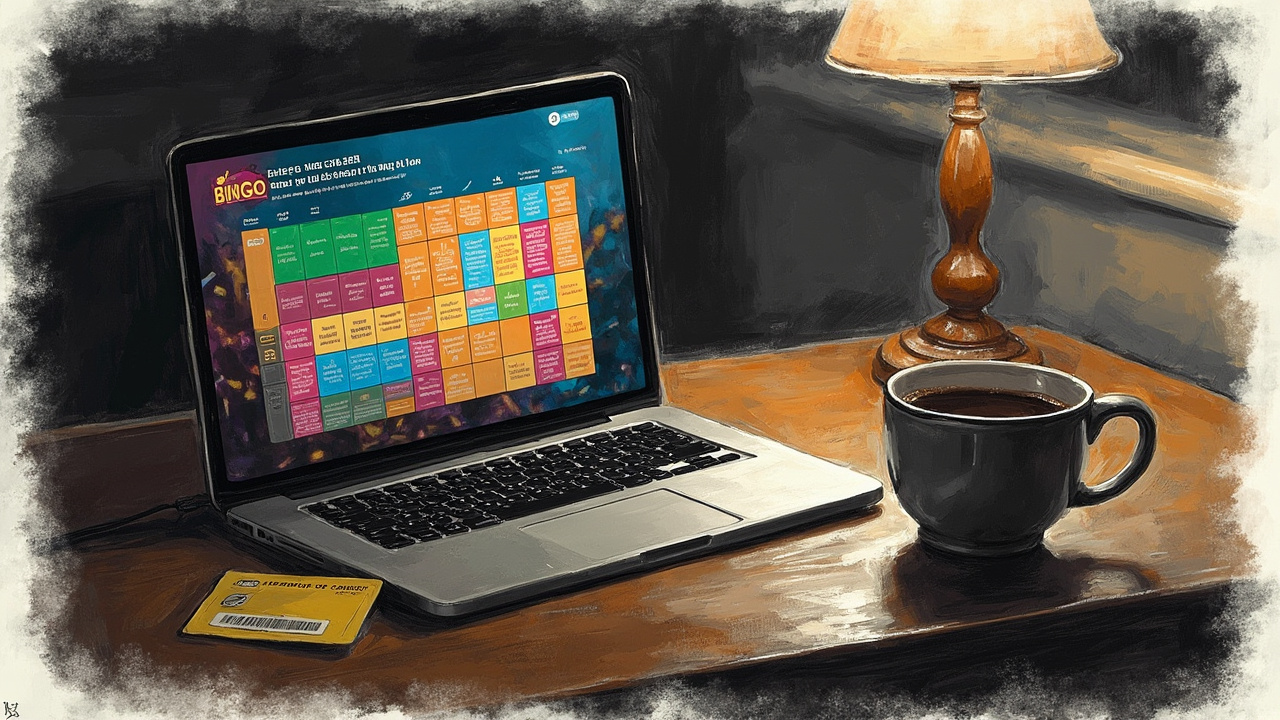
A usable provably fair casino lives or dies on its interface, and this is where most operators quietly fall over. I treat a casino lobby the way I treat a baccarat pit at 11pm on a Saturday – if a new dealer cannot find the chip tray in fifteen seconds, the layout is wrong. The verify button should sit on the result screen, not behind a settings cog. The best lobbies I have audited on the Gold Coast put the verification panel in plain view, with seed hash, nonce and round ID stacked vertically.
Navigation matters just as much. Filter chips for game type, volatility and provability need to read like a real menu, not a beauty buzz. Search should accept plain terms – „dice“, „crash“, „blackjack“ – without forcing a category dropdown first. Language consistency is another giveaway: if the cashier reads „deposit“ but the verification page reads „fund account“, the build is unfinished. I would rather a casino ship three clean rooms than thirty half-finished lobbies, and most Australians would nod along, no worries.
Heavy gradients, anime mascots and animated dice throwers look defo busy as a Saturday arvo pokies room but bury the maths. A muted palette with one accent colour flagging the verify action does more for trust than any banner ad. Henry Wilson, Head of Analytics at Oceanic Gaming Strategy, notes retention jumps when the verification trail is two taps from the result, not four. Reckon that is the single biggest tell between a real provably fair casino and a marketing reskin.
Where Localisation, Mobile and Loyalty Meet
For an Australian audience, localisation is where many offshore crypto sites quietly fall short. The cashier should accept AUD directly rather than force a USD conversion with a hidden margin, and published with us the verification help-centre page should not still read American English. Crypto deposits in BTC, ETH and USDT are table stakes; what separates a serious operator is whether withdrawals clear quickly and the verification history is downloadable as a CSV. I have watched Gold Coast players in my training cohorts abandon a fair casino because the support chat took 36 hours to answer in AEST – that is a fixable localisation miss.
Mobile matters as much. A provably fair result panel that scrolls sideways on an iPhone is not really verifiable; the best builds mirror the desktop layout one-to-one, with the verify modal opening full-screen on small devices. Loyalty programmes need equal scrutiny: tier points earned on a provably fair dice game should count the same as on a slot, and the terms should use Australian spelling throughout – colour not color, centre not center.
Then there is the cultural layer. In craps traditions tied to the Las Vegas Strip – which sits in Paradise, Nevada rather than Las Vegas proper – some players refuse to let a new shooter’s first roll count if it is a seven, calling it the „seven out“ curse. Whether or not you buy into that, the logic applies online: a fresh session should not open one-sided, and the verification tools should let you prove it either way.
Player-fit verdict: provably fair casino games explained properly suit the punter who treats verification as a means rather than a marketing badge – and who wants AUD wallets, AEST support and a verify button reachable in two taps. If the cashier, help-centre and result screen all pass a quick local check, the build is worth your arvo. If they do not, no fancy seed-pair demo will paper over a clunky interface.